





What’s the most effective workout split for busy men to maximize strength?

Navigating the Strength Journey for Time-Strapped Men
For many busy men, carving out time for effective strength training can feel like an insurmountable challenge. Between work, family, and other commitments, the idea of hitting the gym five or six days a week for hour-long sessions is often unrealistic. The good news is that maximizing strength doesn’t necessarily require endless hours; it demands smart, efficient planning. The key lies in selecting the right workout split – a structured approach to dividing your training across the week – that aligns with your schedule and optimizes your progress.

Understanding Workout Splits and Strength Gains
A workout split dictates which muscle groups you train on which days. For strength maximization, the goal is to hit muscle groups frequently enough to stimulate growth and adaptation, while also allowing sufficient recovery. The most effective splits for busy individuals balance training frequency with recovery, ensuring that every minute spent in the gym contributes meaningfully to your strength goals.
The Full Body Split: High Frequency, High Efficiency
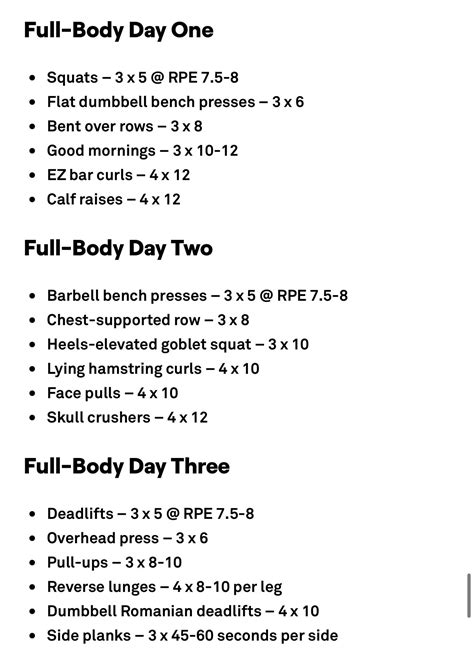
Often considered the gold standard for busy men, a full body split involves training all major muscle groups in a single session, typically 2-3 times per week. This approach offers several distinct advantages for strength:
- High Frequency: You stimulate each muscle group more often throughout the week, which is excellent for strength adaptation.
- Time-Efficient: With only 2-3 sessions, it’s easier to fit into a demanding schedule.
- Excellent for Compound Lifts: Focus on exercises like squats, deadlifts, bench presses, and overhead presses, which work multiple muscles simultaneously and are cornerstones of strength building.
A typical 3-day full body split (e.g., Monday, Wednesday, Friday) allows for adequate recovery between sessions. Volume per muscle group is lower per session, but frequency makes up for it over the week.
The Upper/Lower Split: Balanced Frequency and Volume
Another highly effective option, especially for those who can commit to four days a week, is the Upper/Lower split. This divides your training into two distinct sessions: one for all upper body muscles and one for all lower body muscles. You typically perform two upper body and two lower body workouts per week (e.g., Monday – Upper, Tuesday – Lower, Thursday – Upper, Friday – Lower).
- Increased Volume: Compared to a full body split, you can dedicate more exercises and sets to upper or lower body muscle groups on their respective days.
- Targeted Recovery: While one half of your body works, the other half recovers.
- Still Efficient: Four sessions are manageable for many, and the focus allows for good intensity.

Push/Pull/Legs (PPL) Split: Focused Muscle Groups
The PPL split divides your training into three types of workouts: Push (chest, shoulders, triceps), Pull (back, biceps), and Legs (quads, hamstrings, glutes, calves). A typical schedule would involve training each group twice a week (e.g., Push, Pull, Legs, Rest, Push, Pull, Legs, Rest). While popular for bodybuilding, it can also be adapted for strength.
- High Volume Potential: Each muscle group gets a dedicated day, allowing for significant volume.
- Good for Recovery: Similar to Upper/Lower, muscle groups get specific rest days.
However, for busy men explicitly focused on maximizing strength with limited time, the PPL split might involve more gym time (6 days/week if run optimally) than a full body or 4-day Upper/Lower split, and the lower frequency per muscle group (compared to full body) might not be ideal for absolute strength gains if time limits total weekly volume.

Maximizing Strength Beyond the Split
Regardless of the split you choose, several principles are paramount for strength gains:
- Progressive Overload: Consistently strive to lift more weight, perform more reps, or increase time under tension over time. This is the fundamental driver of strength.
- Compound Movements: Prioritize multi-joint exercises like squats, deadlifts, bench press, overhead press, rows, and pull-ups. These work multiple muscle groups and allow you to lift heavier weights.
- Proper Form: Lifting heavy is only effective if done safely and correctly to prevent injury and ensure muscle activation.
- Nutrition and Recovery: Adequate protein intake, sufficient calories, and quality sleep are non-negotiable for muscle repair and growth.
- Consistency: The best split is the one you can stick to consistently over the long term.
The Verdict: What’s Best for Busy Men?
For most busy men aiming to maximize strength, the Full Body Split (2-3 times a week) or the Upper/Lower Split (4 times a week) will be the most effective and sustainable options. The Full Body split offers unparalleled frequency and efficiency for those with very limited time, while the Upper/Lower allows for a bit more volume and focus if four gym days are feasible. Experiment with both to see which best fits your lifestyle and recovery capabilities.
Remember, consistency trumps intensity when time is a factor. Choose a split you can adhere to, apply progressive overload, and watch your strength soar.