





What’s the most time-efficient workout split for maximum strength and hypertrophy?
In the quest for a more muscular and stronger physique, many lifters face the universal challenge of limited time. Balancing work, life, and gym commitments often leaves us searching for the most efficient path to progress. The good news is that maximizing strength and hypertrophy doesn’t necessarily mean spending endless hours in the gym. Strategic planning of your workout split can deliver superior results in less time.
Understanding the Core Principles
Before diving into specific splits, it’s crucial to understand the foundational principles that drive both strength and hypertrophy:
- Frequency: How often you train a muscle group. Higher frequency generally leads to more opportunities for muscle protein synthesis.
- Volume: The total amount of work performed (sets x reps x weight). Sufficient volume is essential for growth.
- Intensity: The effort level, typically measured by the weight lifted relative to your maximum. High intensity is crucial for strength gains.
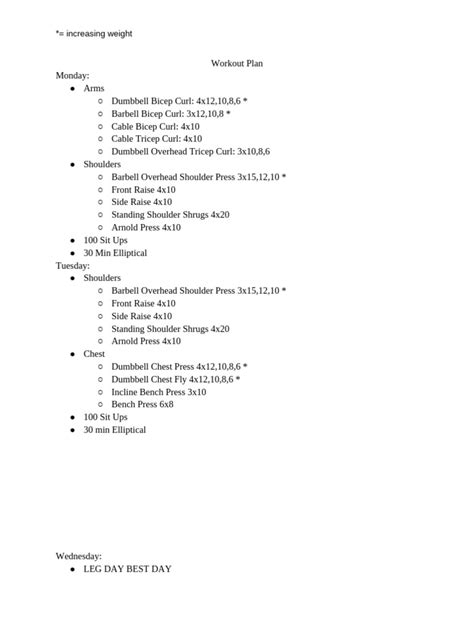
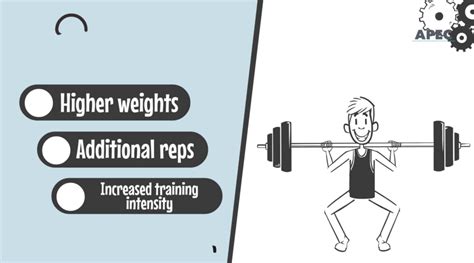
- Progressive Overload: Continuously increasing the demands on your muscles (e.g., more weight, reps, sets) over time. This is the bedrock of progress.
- Recovery: Adequate rest and nutrition are paramount for muscle repair and growth.
Evaluating Common Workout Splits for Efficiency
Let’s examine some popular workout splits through the lens of time efficiency for strength and hypertrophy:
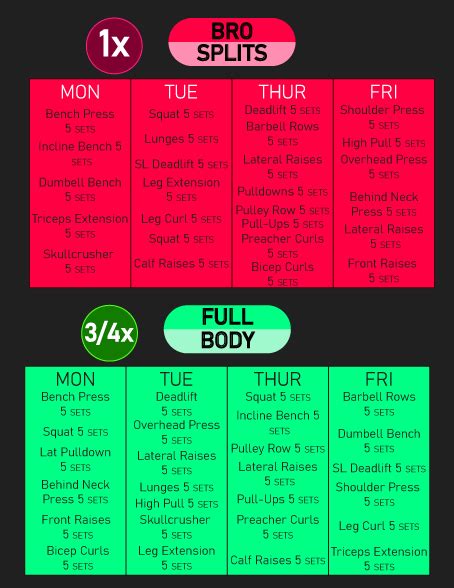
Full Body Split (3x/week)
How it works: You train all major muscle groups in each session, typically 3 non-consecutive days a week (e.g., Monday, Wednesday, Friday).
- Pros: High frequency for all muscle groups (3x/week), excellent for beginners and intermediates, allows for good recovery between sessions, highly time-efficient if workouts are structured well (focus on compound movements).
- Cons: Each session can be long if too many exercises are included. Requires careful volume management per session to avoid overtraining.
Upper/Lower Split (4x/week)
How it works: You dedicate two days to upper body and two days to lower body, often structured as Upper, Lower, Rest, Upper, Lower, Rest, Rest.
- Pros: Moderate frequency (2x/week per muscle group), allows for higher volume per muscle group per session than full body, good balance between frequency and recovery, very effective for intermediate lifters.
- Cons: Requires 4 gym sessions per week, which might be too much for some schedules.

Push/Pull/Legs (PPL) Split (3 or 6x/week)
How it works: Muscles are grouped by their function (Push: chest, shoulders, triceps; Pull: back, biceps; Legs: quads, hamstrings, glutes). Can be run 3x/week (one rotation) or 6x/week (two rotations).
- Pros (3x/week): Similar to full body in frequency, but potentially allows for slightly more focus on specific push/pull/leg movements. Good for beginners/intermediates.
- Pros (6x/week): Very high frequency (2x/week per muscle group), allows for significant volume and recovery between body parts within the week. Excellent for advanced lifters with ample time.
- Cons (3x/week): Lower frequency than full body for individual muscles if not structured carefully.
- Cons (6x/week): Highly time-intensive, demanding 6 gym sessions per week, which is not time-efficient for most.
The Most Time-Efficient Choices
For maximum strength and hypertrophy with optimal time efficiency, the following splits consistently come out on top:
1. Full Body Split (3x/week)
This is arguably the most time-efficient for most people. By training each muscle group three times a week, you maximize protein synthesis opportunities. Keep sessions to 45-75 minutes by focusing on 4-6 compound exercises (squats, deadlifts, bench press, overhead press, rows, pull-ups) and perhaps one or two isolation movements. This high-frequency, moderate-volume approach is incredibly effective for both strength and muscle gain.
2. Upper/Lower Split (4x/week)
If you have four days per week to commit, the Upper/Lower split offers a fantastic balance. You hit each major muscle group twice a week, allowing for more specific focus and volume per session compared to a full body workout, without the overwhelming frequency of a 6-day split. Each session can be 60-90 minutes, allowing for more exercises and higher total volume.

Optimizing Your Chosen Split for Efficiency
- Prioritize Compound Movements: Exercises like squats, deadlifts, bench press, overhead press, and rows engage multiple muscle groups, providing the most bang for your buck.
- Limit Isolation Work: While isolation exercises have their place, excessive reliance on them can bloat workout duration without significantly adding to overall strength or hypertrophy in a time-constrained setting.
- Incorporate Supersets/Dropsets Strategically: For certain exercises, pairing non-competing muscle groups (e.g., bicep curls with tricep extensions) can cut down on rest time. Dropsets can maximize intensity in a shorter period.
- Minimize Rest Times (within reason): Shorter rest periods (60-90 seconds) between sets can increase the metabolic stress, contributing to hypertrophy, and shorten overall workout time. For heavy strength work, longer rests (2-3 minutes) might still be necessary.
- Track Progress Relentlessly: Ensure you are always striving for progressive overload, whether by adding weight, reps, or improving form. This is more crucial than the split itself.
Conclusion
For most individuals aiming for maximum strength and hypertrophy with optimal time efficiency, a 3x/week Full Body split or a 4x/week Upper/Lower split are the superior choices. Both allow for a high training frequency for each muscle group, facilitate adequate recovery, and can be structured to deliver substantial volume without requiring excessive gym time. The ‘best’ split ultimately depends on your personal schedule, recovery capacity, and preferences, but these two offer the strongest blend of effectiveness and efficiency.