





What’s the most efficient workout split to maximize strength and hypertrophy gains?

When embarking on a fitness journey focused on building both brute strength and impressive muscle mass (hypertrophy), one of the most crucial decisions you’ll make is choosing the right workout split. A well-designed split optimizes your training frequency, volume, and recovery, allowing you to consistently challenge your muscles and facilitate growth. But with a myriad of options available, how do you pinpoint the most efficient one?
Understanding Strength and Hypertrophy
Before diving into splits, it’s essential to understand the distinct, yet often intertwined, mechanisms of strength and hypertrophy. Strength training primarily focuses on increasing the maximum force your muscles can produce, often involving heavier loads and lower repetitions. Hypertrophy, on the other hand, targets muscle growth through metabolic stress, muscle damage, and mechanical tension, typically using moderate loads and higher repetition ranges. An efficient workout split must address both.
Popular Workout Splits and Their Efficiency
Several workout splits are widely utilized, each with its own advantages and disadvantages for strength and hypertrophy.
Full Body Split
Description: You train all major muscle groups in each session, typically 2-3 times per week. This is often recommended for beginners due to its high frequency and lower per-session volume.
Efficiency for S/H: Excellent for beginners to build foundational strength and muscle. The high frequency (hitting muscles multiple times a week) is great for skill acquisition and stimulating growth. However, as you advance, the per-session volume can become too high to maintain intensity, and recovery may become an issue.

Upper/Lower Split
Description: Divides your training into upper body days and lower body days. A common structure is 4 days a week (e.g., Upper, Lower, Rest, Upper, Lower, Rest, Rest).
Efficiency for S/H: Highly efficient for both. It allows for a good balance of frequency (each muscle group is hit twice a week) and sufficient volume per session. You can dedicate specific days to heavier strength work and others to more hypertrophy-focused volume, making it versatile for intermediate lifters.
Push/Pull/Legs (PPL) Split
Description: A popular 3-day split that can be run 2 or even 3 times a week (6 days total). ‘Push’ involves chest, shoulders, triceps; ‘Pull’ involves back, biceps, rear delts; ‘Legs’ involves quads, hamstrings, glutes, calves.
Efficiency for S/H: One of the most highly regarded splits for maximizing both. Running it twice a week (6 days total) allows for hitting each major muscle group twice, which is optimal for hypertrophy, while also providing ample opportunity for high-intensity strength work. The logical grouping of muscle movements reduces fatigue overlap and allows for focused training sessions.

Bro Split (Body Part Split)
Description: Each workout targets only one or two muscle groups (e.g., Chest day, Back day, Leg day, Shoulder day, Arm day). Typically run 4-5 days a week.
Efficiency for S/H: While popular among bodybuilders, it’s generally less efficient for natural lifters focused on both strength and hypertrophy. The major drawback is low frequency – each muscle group is typically trained only once a week. This might not be enough stimulus for optimal muscle protein synthesis or strength adaptation, especially compared to splits that hit muscles twice a week.
Key Factors for Maximizing Gains
Beyond the split itself, several factors dictate its effectiveness:
- Training Frequency: For optimal hypertrophy, hitting a muscle group 2-3 times per week is generally superior to once a week. For strength, consistent practice of compound lifts is key.
- Volume: The total number of sets and reps performed. There’s an optimal range; too little won’t stimulate growth, too much can impede recovery.
- Intensity: The weight lifted relative to your maximum. Heavier loads (higher intensity) are crucial for strength; moderate loads with higher reps contribute more to hypertrophy.
- Progressive Overload: Consistently increasing the demands on your muscles (e.g., more weight, more reps, more sets, better form) is the fundamental principle for ongoing gains.
- Recovery: Adequate sleep, nutrition, and rest between sessions are paramount. Without proper recovery, even the best split will fail.

The Verdict: Which Split is Most Efficient?
While there’s no single ‘most efficient’ split that fits everyone perfectly, for most intermediate to advanced lifters aiming to maximize both strength and hypertrophy, a split that allows for hitting each major muscle group at least twice a week is generally superior. This often points towards the Upper/Lower split (4 days/week) or the Push/Pull/Legs (PPL) split (6 days/week).
The PPL split, in particular, allows for very high frequency and volume per muscle group across the week, with excellent recovery time for individual muscle groups within the microcycle. This structure allows for dedicated focus on heavy compound movements (strength) on one day and higher volume, accessory work (hypertrophy) on the subsequent cycle for that muscle group, or simply a balanced approach within each session.

Beyond the Split: Essential Considerations
Remember that the split is just a framework. Its effectiveness hinges on what you put into it:
- Consistency: The best split is the one you can stick to consistently over the long term.
- Progressive Overload: Continuously strive to lift more weight, perform more reps, or improve your technique.
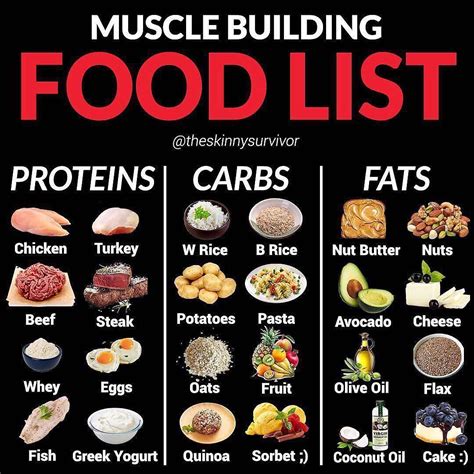
- Nutrition: Support your training with adequate protein, carbohydrates, and healthy fats.
- Sleep: Prioritize 7-9 hours of quality sleep per night for optimal recovery and hormone regulation.
- Individualization: What works best for one person might not be ideal for another. Listen to your body and be prepared to adjust your split, volume, or intensity as needed.
In conclusion, while the Push/Pull/Legs or Upper/Lower splits often stand out for their efficiency in maximizing both strength and hypertrophy due to optimal training frequency and volume distribution, the ‘best’ split is ultimately a personal choice. Experiment, track your progress, prioritize recovery, and remain consistent to unlock your full potential.