





What workout split maximizes strength & hypertrophy for busy pros?

In the demanding world of busy professionals, time is a luxury. Yet, the desire to build strength, increase muscle mass (hypertrophy), and maintain overall fitness remains strong. The challenge lies in finding a workout split that is not only effective but also sustainable within a packed schedule. This article delves into the most efficient workout splits and critical programming principles to help you maximize your gains without sacrificing your career or personal life.

Understanding the Busy Pro’s Constraints
Before diving into specific splits, it’s essential to acknowledge the unique constraints faced by busy professionals:
- Limited Time: Often only 3-4 days a week, sometimes less, with sessions ideally lasting 45-75 minutes.
- Fatigue & Stress: High-pressure jobs can lead to mental and physical fatigue, impacting recovery and workout intensity.
- Need for Efficiency: Every minute in the gym must count, focusing on compound movements and effective programming.
- Consistency is Key: Whatever split is chosen, it must be something that can be adhered to consistently over the long term.
Optimal Workout Splits for Time-Crunched Schedules
The Full Body Split (3x per Week)
The full body split involves training all major muscle groups in each workout session, typically performed 3 times per week on non-consecutive days (e.g., Monday, Wednesday, Friday). This split is highly effective for both strength and hypertrophy, especially for beginners and intermediate lifters, due to its high frequency.
Pros: High frequency (each muscle group hit 3x/week), excellent for skill acquisition, very time-efficient, great for recovery between sessions.
Cons: Lower volume per muscle group per session, can be demanding if not programmed correctly, requires careful exercise selection to avoid excessive fatigue.
The Upper/Lower Split (4x per Week)
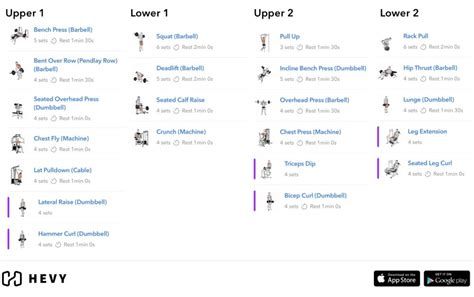
The upper/lower split divides your body into two distinct training days: one for upper body muscles and one for lower body muscles. Typically, this is done four times a week (e.g., Upper, Lower, Rest, Upper, Lower, Rest, Rest). This allows for greater volume per muscle group per session compared to a full body routine while still providing adequate frequency.
Pros: Higher volume per muscle group per session, good frequency (each muscle group hit 2x/week), balanced approach, allows for more specialized focus on upper or lower body.
Cons: Requires 4 days in the gym, which might be a stretch for some extremely busy individuals.
Key Programming Principles for Maximizing Gains
1. Progressive Overload
This is the fundamental principle for continuous strength and muscle growth. It means consistently challenging your muscles over time by gradually increasing the weight, reps, sets, or decreasing rest times. Without progressive overload, your muscles have no reason to adapt and grow stronger.
2. Compound Movements First
Prioritize compound exercises (squats, deadlifts, bench press, overhead press, rows) as they work multiple muscle groups simultaneously, leading to greater strength gains and hormonal response in less time. Use isolation exercises sparingly and towards the end of your workout.
3. Intensity and Effort
For busy pros, less time often means higher intensity. Train close to failure (RPE 7-9 or 1-3 reps in reserve) on most sets to stimulate maximum muscle fiber recruitment and growth. Quality over quantity is paramount.

4. Smart Exercise Selection
Choose exercises that give you the most bang for your buck and minimize injury risk. Stick to exercises you can perform with good form, and consider variations that suit your body mechanics (e.g., sumo deadlifts instead of conventional if more comfortable).
5. Nutrition and Recovery
Training is only half the battle. Ensure adequate protein intake (1.6-2.2g/kg body weight), sufficient calories to support growth, and prioritize 7-9 hours of quality sleep. Recovery is when your muscles actually grow.
Putting It Into Practice: Example Schedules
Full Body (3x/week)
- Monday: Squats, Bench Press, Barbell Rows, Overhead Press, Face Pulls, Bicep Curls
- Wednesday: Deadlifts, Incline Dumbbell Press, Lat Pulldowns, Lateral Raises, Triceps Extensions
- Friday: Front Squats, Military Press, Pull-ups, Dumbbell Rows, Leg Press, Calf Raises
(Adjust sets and reps, aiming for 3-4 sets of 5-12 reps depending on exercise and goal.)
Upper/Lower (4x/week)
- Monday (Upper): Bench Press, Barbell Rows, Overhead Press, Pull-ups, Triceps Pushdowns, Bicep Curls
- Tuesday (Lower): Squats, Romanian Deadlifts, Leg Press, Hamstring Curls, Calf Raises
- Thursday (Upper): Incline Dumbbell Press, Seated Cable Rows, Dumbbell Shoulder Press, Face Pulls, Dips, Lateral Raises
- Friday (Lower): Deadlifts, Lunges, Leg Extensions, Glute Ham Raises, Abdominal Work
(Adjust sets and reps, aiming for 3-5 sets of 6-15 reps depending on exercise and goal.)

Conclusion
For busy professionals aiming to maximize strength and hypertrophy, the Full Body (3x/week) and Upper/Lower (4x/week) splits offer the best balance of effectiveness and time efficiency. Paired with crucial principles like progressive overload, prioritizing compound movements, and sufficient recovery, you can build an impressive physique and significant strength without letting your professional life derail your fitness goals. Consistency and smart programming are your most powerful tools.