





How to optimize workout intensity for peak performance & consistent gains?

Achieving peak performance and consistent gains in your fitness journey isn’t just about showing up; it’s about strategically manipulating your workout intensity. Many athletes and fitness enthusiasts chase heavier weights or longer sessions, but true optimization lies in understanding and applying the right level of intensity for your specific goals and current capabilities. This guide will walk you through the principles of defining, measuring, and adjusting your workout intensity to unlock your full potential and ensure sustainable progress.
Understanding Workout Intensity Beyond Just Lifting Heavy
Workout intensity is often mistakenly equated solely with lifting the heaviest possible weight. While lifting heavy is certainly one form of high intensity, it’s a much broader concept encompassing various factors that dictate the challenge and stimulus placed on your body. For a powerlifter, intensity might mean maximal lifts; for a marathon runner, it could be maintaining a high pace for an extended period; and for a bodybuilder, it might be about time under tension and proximity to failure.
True intensity reflects the metabolic, mechanical, and neurological demand of an exercise relative to an individual’s maximal capacity. Optimizing this means finding the sweet spot where you provide enough stimulus for adaptation without overtraining or under-training.

Key Metrics for Measuring and Managing Intensity
To effectively optimize intensity, you need tangible ways to measure and adjust it. Here are some of the most common and effective metrics:
Rate of Perceived Exertion (RPE) / Reps in Reserve (RIR)
- RPE Scale (1-10): A subjective scale where 1 is no effort and 10 is maximal effort (absolute failure). An RPE of 7-9 is often targeted for effective training.
- Reps in Reserve (RIR): Directly related to RPE, RIR indicates how many more repetitions you could have performed before reaching failure. An RIR of 2 means you could have done 2 more reps. This is excellent for autoregulation, allowing you to adjust daily based on fatigue levels.
Percentage of One-Rep Max (%1RM)
Primarily used in strength training, this objective measure calculates the load as a percentage of the maximum weight you can lift for one repetition. For example, training at 80% of your 1RM is a high-intensity stimulus for strength gains. This method requires periodically testing your 1RM or estimating it.
Heart Rate Zones
For cardiovascular training, heart rate zones are critical. Based on a percentage of your maximum heart rate (MHR), these zones (e.g., Zone 2 for endurance, Zone 4-5 for high-intensity interval training) guide your cardio intensity. Devices like heart rate monitors make this very accessible.
Time Under Tension (TUT)
Predominantly for hypertrophy (muscle growth), TUT focuses on the duration a muscle is under strain during a set. Slower eccentric (lowering) phases and controlled movements increase TUT, placing greater metabolic stress on the muscle, even with lighter loads.

Tailoring Intensity to Your Specific Goals
The “optimal” intensity isn’t universal; it’s goal-dependent.
For Strength Gains
- High Intensity, Low Volume: Typically involves lifting heavy (80-95% 1RM, RPE 8-10, RIR 0-2) for fewer repetitions (1-6) and more sets, with longer rest periods (2-5 minutes).
- Focus: Maximal force production and neurological adaptations.
For Muscle Hypertrophy (Growth)
- Moderate Intensity, Moderate-High Volume: Loads typically range from 60-85% 1RM (RPE 7-9, RIR 1-3) for 6-15 repetitions per set. Moderate rest periods (60-120 seconds) and a focus on time under tension and muscle fatigue are key.
- Focus: Metabolic stress, mechanical tension, and muscle damage.
For Endurance (Cardiovascular & Muscular)
- Low-Moderate Intensity, High Volume: For cardiovascular endurance, this means sustained efforts in specific heart rate zones (e.g., Zone 2 for aerobic base). For muscular endurance, it involves lighter loads for higher repetitions (15+ reps, RPE 6-8, RIR 2-4) with shorter rest periods.
- Focus: Improving aerobic capacity and muscular fatigue resistance.

The Role of Progressive Overload and Periodization
Optimizing intensity is intrinsically linked to two fundamental training principles:
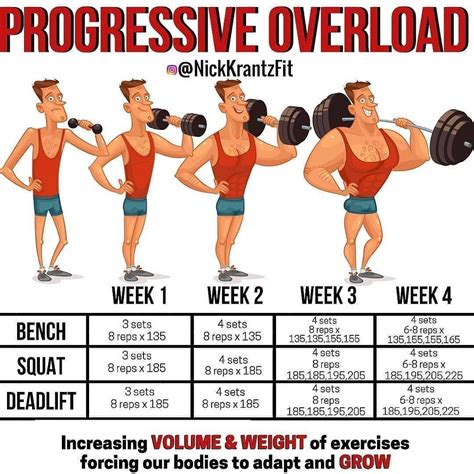
Progressive Overload
This is the gradual increase in stress placed upon the body during training. Without continually challenging your body, adaptation will cease. You can achieve progressive overload by:
- Increasing the weight (most common).
- Increasing repetitions or sets.
- Decreasing rest times.
- Increasing time under tension.
- Improving form or range of motion with the same weight.
- Increasing training frequency.
Smart intensity management allows you to apply progressive overload safely and effectively, avoiding plateaus and injuries.
Periodization
Periodization involves systematically varying your training intensity, volume, and exercise selection over planned cycles (e.g., macrocycles, mesocycles, microcycles). This strategic fluctuation helps manage fatigue, prevent overtraining, and peak for specific events or phases. For example, you might have phases of higher intensity/lower volume followed by lower intensity/higher volume, or deload weeks where intensity and volume are significantly reduced to allow for recovery and supercompensation.
Practical Tips for Optimizing Your Intensity
- Listen to Your Body: The most crucial tip. Some days you’ll feel stronger, others more fatigued. Use RPE/RIR to autoregulate and adjust your planned intensity accordingly.
- Track Your Progress: Log your weights, reps, sets, RPE, and even recovery metrics. This data is invaluable for identifying what’s working and when adjustments are needed.
- Focus on Form First: Never sacrifice proper technique for higher intensity. Poor form not only reduces effectiveness but drastically increases injury risk.
- Incorporate Deloads: Regularly scheduled deload weeks (every 4-8 weeks, depending on training age and intensity) are vital for recovery, injury prevention, and resensitizing your body to training stimuli.
- Prioritize Recovery: Adequate sleep, nutrition, and stress management directly impact your ability to recover from high-intensity efforts and perform consistently.
- Seek Expert Guidance: If unsure, consider working with a qualified coach who can help design a periodized program tailored to your goals and teach you how to effectively manage intensity.
Conclusion
Optimizing workout intensity is a sophisticated skill that differentiates those who make sporadic progress from those who achieve consistent, long-term gains. By understanding the various facets of intensity, utilizing effective metrics like RPE and %1RM, tailoring your approach to specific goals, and integrating principles like progressive overload and periodization, you can fine-tune your training. Remember, it’s not just about how hard you train, but how smart. Embrace the journey of discovery and continuous adjustment to unlock your peak performance.