



How to maximize strength & endurance gains with minimal gym time?

Unlock Your Potential: Efficient Workouts for Busy Schedules
In today’s fast-paced world, finding ample time for the gym can feel like an Olympic feat in itself. Many believe that significant gains in strength and endurance require hours of dedication daily. The good news? That’s a myth. With smart planning and targeted strategies, you can achieve remarkable results with minimal gym time. The key lies in optimizing every minute you spend.
Prioritize Compound Movements for Strength
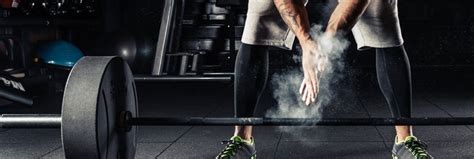
When time is a luxury, compound exercises become your best friend. These movements work multiple muscle groups and joints simultaneously, delivering more bang for your buck than isolation exercises. Think squats, deadlifts, bench presses, overhead presses, and rows. Including these fundamental lifts forms the backbone of an efficient strength program.
- Squats: Engages quads, glutes, hamstrings, and core.
- Deadlifts: Works virtually every muscle from your grip to your glutes and hamstrings.
- Bench Press: Targets chest, shoulders, and triceps.
- Overhead Press: Builds shoulder and tricep strength, with significant core involvement.
- Rows: Develops back muscles, biceps, and forearms.
Focus on heavy, challenging sets with proper form. Aim for 3-5 sets of 5-8 repetitions for strength gains, keeping rest periods controlled to maintain intensity.
Embrace High-Intensity Interval Training (HIIT) for Endurance
Forget long, steady-state cardio sessions if you’re pressed for time. HIIT is a game-changer for endurance and even contributes to strength. It involves short bursts of intense exercise followed by brief recovery periods. A 15-20 minute HIIT session can be more effective than 45 minutes of moderate cardio.
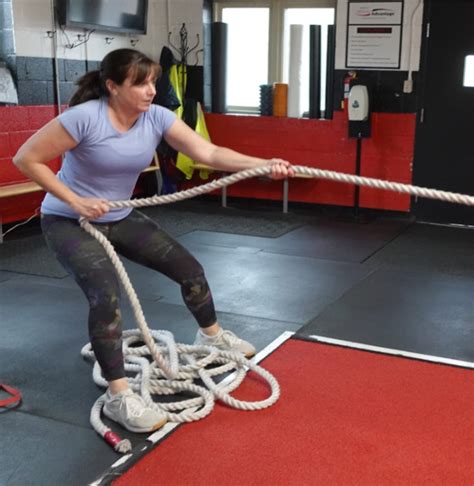
Examples include sprint intervals, battle ropes, burpees, kettlebell swings, or cycling with maximal effort. HIIT not only improves cardiovascular health but also boosts your metabolism and can help maintain muscle mass.

Leverage Progressive Overload Consistently
Regardless of how much time you have, the principle of progressive overload is non-negotiable for continued gains. To get stronger, you must continually challenge your muscles. This means gradually increasing the weight, repetitions, sets, or decreasing rest times over time. Keep a workout log to track your progress and ensure you’re consistently pushing yourself beyond your comfort zone.
Small, consistent increases add up significantly over weeks and months. Don’t chase personal bests every session, but strive for steady improvement.
Integrate Supersets and Circuit Training
To further condense your workout, incorporate supersets (performing two exercises back-to-back with minimal rest) or circuit training (performing a series of exercises with short rests between them, then resting after the entire circuit). This keeps your heart rate elevated, improves conditioning, and drastically reduces total workout time.
Example Superset: Barbell Bench Press followed immediately by Bent-Over Rows.
Example Circuit: Squats, Push-ups, Lunges, Plank (repeat 3-4 times).
Don’t Neglect Recovery and Nutrition
No matter how efficient your workouts are, gains happen outside the gym. Adequate sleep, proper nutrition (sufficient protein, healthy fats, and complex carbohydrates), and hydration are critical for muscle repair and energy replenishment. Skimping on these will sabotage your efforts, making your minimal gym time far less effective.

The Power of Consistency Over Duration
Finally, remember that consistency trumps infrequent, marathon sessions. Three well-structured 30-45 minute workouts per week will yield far better results than one grueling 2-hour session every fortnight. Make fitness a non-negotiable part of your routine, even if it’s just a few times a week, and watch your strength and endurance soar.
By focusing on compound movements, embracing HIIT, applying progressive overload, using time-saving techniques like supersets, and prioritizing recovery, you can build impressive strength and endurance without living in the gym. It’s about working smarter, not just harder.