





Beyond standard reps: optimize progressive overload for peak strength?
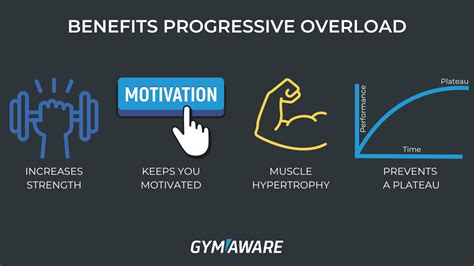
Progressive overload is the fundamental principle driving strength gains and muscle hypertrophy. Simply put, it means continually increasing the demands placed on your muscles over time. For many, this translates to adding more weight or more repetitions to their lifts. While effective in the initial stages, relying solely on these basic methods can lead to plateaus and frustration. To truly unlock peak strength potential, it’s essential to look beyond the standard and explore a wider array of progressive overload strategies.
Beyond Traditional Methods: Expanding Your Arsenal
While progressively lifting heavier weight or performing more reps are the bedrock of strength training, the body is incredibly adaptable. Over time, it learns to cope with these stimuli, leading to diminished returns. Optimizing progressive overload requires a more nuanced approach, incorporating various stressors to continually challenge your system. This involves manipulating different training variables to ensure consistent adaptation.

1. Manipulating Volume and Density
Instead of just more reps per set, consider increasing total weekly volume by adding more sets or training days. Another powerful technique is increasing training density – doing the same amount of work in less time, or more work in the same amount of time. This can be achieved by carefully reducing rest periods between sets. However, too little rest can compromise performance, so finding the sweet spot is crucial for maintaining intensity.
2. Tempo Training
Changing the speed of your repetitions can dramatically alter the stress on your muscles. Slowing down the eccentric (lowering) phase, for instance, increases time under tension and can create greater microtrauma, stimulating growth and strength. Pauses at the bottom of a squat or bench press eliminate the stretch reflex, forcing muscles to work harder from a dead stop, which is excellent for building absolute strength and overcoming sticking points.

3. Partial Reps and Range of Motion (ROM) Manipulation
While full ROM is generally preferred for muscle development, strategically incorporating partial reps can be a potent strength builder. Lifting heavier loads through a shorter, stronger range of motion can help overload the nervous system and accustom your body to handling greater weights. This can then translate to increased strength in your full-range lifts. Similarly, intentionally extending ROM (e.g., deficit deadlifts) can enhance strength at stretched positions.
4. Accommodating Resistance (Bands and Chains)
Adding bands or chains to exercises like squats, deadlifts, and bench presses allows for accommodating resistance. As you lift, the resistance increases, matching your natural strength curve. This teaches you to accelerate through the entire range of motion, improving power and strength, particularly in the lockout phase where you are strongest.

5. Advanced Set Structures: Cluster Sets and Myo-reps
Cluster Sets: These involve taking short, intra-set breaks (10-20 seconds) between a few repetitions within a set. This allows for higher quality reps with heavier loads to be performed within a single “set,” increasing total volume and intensity without excessive fatigue. They are excellent for power and strength development.
Myo-reps: A variation of rest-pause training, myo-reps involve performing an activation set to near failure, then taking very short rests (5-15 seconds) and performing mini-sets of 1-5 reps until you can no longer complete the desired number of reps. This technique maximizes muscle fiber recruitment and metabolic stress, promoting hypertrophy and strength endurance.
6. Periodization and Deloads
True optimization of progressive overload isn’t just about constant increases; it’s also about strategic planning. Periodization involves structuring your training into cycles (macro, meso, micro) that vary volume, intensity, and exercise selection. This prevents overtraining, facilitates recovery, and ensures continuous adaptation. Integrating planned deload weeks – periods of reduced volume and/or intensity – allows the body to fully recover and supercompensate, leading to fresh gains when you return to full training.
Implementing and Tracking Your Progress
Regardless of the advanced techniques you employ, meticulous tracking is non-negotiable. Keep a detailed training log of sets, reps, weights, rest times, and even perceived exertion. This data allows you to objectively assess what’s working and identify areas for adjustment. Experiment with different strategies, but change only one variable at a time to isolate its effect. Most importantly, listen to your body; recovery is paramount for long-term progress.

Conclusion
Progressive overload is the bedrock of strength development, but its application extends far beyond simply adding weight to the bar. By thoughtfully integrating techniques such as manipulating volume and density, employing tempo training, utilizing accommodating resistance, experimenting with advanced set structures like cluster sets and myo-reps, and intelligently periodizing your training, you can continuously challenge your body in new ways. This multifaceted approach is key to breaking through plateaus, optimizing adaptation, and ultimately achieving your peak strength potential. Embrace the complexity, track your progress diligently, and watch your strength soar.