





Unlock peak strength: Best progressive overload methods to break plateaus?
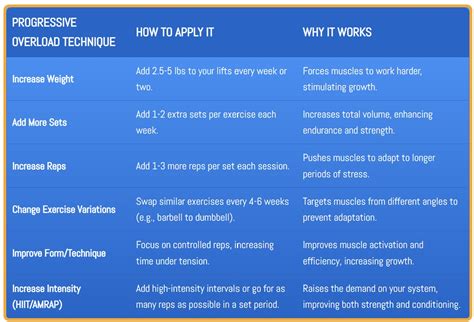
Hitting a plateau in your strength training journey can be incredibly frustrating. You’re putting in the work, but the numbers on the bar or the reps you’re hitting just aren’t moving. This is where the principle of progressive overload becomes your most powerful tool. It’s the fundamental driver of muscle growth and strength gains, ensuring your body continually adapts to new challenges.
Understanding Progressive Overload
At its core, progressive overload means continuously increasing the demands on your musculoskeletal system. Without this constant challenge, your body has no reason to get stronger or build more muscle. It adapts to the current stimulus, and once that adaptation is complete, further progress stalls. Recognizing and applying various methods of progressive overload is key to consistent advancement.

Why Plateaus Occur and How to Break Them
Plateaus aren’t a sign of failure; they’re an indicator that your body has adapted to your current training stimulus. Common reasons include sticking to the same weight and rep scheme, inadequate recovery, poor nutrition, or simply not varying your training enough. To break through, you need to strategically introduce new forms of stress.
Key Progressive Overload Methods
Here are the most effective strategies to keep your strength gains moving:
1. Increase the Load (Weight)
This is the most straightforward and common method. Once you can comfortably perform your target reps and sets with a given weight, it’s time to incrementally increase the weight. Even a small increase (e.g., 2.5 lbs or 1.25 kg) can be enough to stimulate further adaptation over time. Consistency here is crucial.
2. Increase Repetitions
If increasing weight isn’t feasible, or you’re working with bodyweight exercises, focus on increasing the number of repetitions performed within your sets. For example, if you can do 3 sets of 8 pull-ups, aim for 3 sets of 9 or 10 before attempting to add weight.

3. Increase Sets
Adding an extra set to an exercise increases your total training volume. If you’re doing 3 sets of an exercise, try moving to 4 sets. This boosts the overall work your muscles perform, demanding greater adaptation.
4. Decrease Rest Time
By reducing the rest time between your sets, you make the workout more challenging by increasing metabolic stress and cardiovascular demand. This is a great way to improve work capacity and muscular endurance, even if the weight or reps stay the same initially. Be mindful not to compromise form too much.

5. Improve Form and Technique
While not strictly “adding” something, perfecting your technique allows you to lift the weight more efficiently and often with better muscle activation. This can feel like a new challenge, and once your form is dialed in, you might find you can handle more weight or reps with better control, leading to greater stimulus.
6. Increase Time Under Tension (TUT)
This involves slowing down the eccentric (lowering) or concentric (lifting) phases of an exercise. For instance, taking 3-4 seconds to lower the weight during a bicep curl significantly increases the time your muscles are under stress, leading to a different growth stimulus.

7. Increase Training Frequency
If you’re only training a muscle group once a week, consider increasing its frequency to twice a week. More frequent exposure to stimulus (with adequate recovery) can accelerate strength and hypertrophy gains. This needs to be managed carefully to avoid overtraining.
Putting It All Together: Strategic Application
Breaking a plateau often requires a multifaceted approach. Don’t try to apply all methods simultaneously. Instead, choose one or two methods to focus on for a period (e.g., 4-6 weeks) and meticulously track your progress. If you’ve been stuck increasing weight, try focusing on increasing reps, or decreasing rest time for a few weeks before returning to a weight-focused cycle.
- Track Everything: Keep a detailed workout log – weights, reps, sets, rest times, and even how you felt.
- Listen to Your Body: Progressive overload is about challenge, not injury. Prioritize good form and adequate recovery.
- Periodize Your Training: Sometimes a deload week or a slight reduction in intensity is necessary for your body to fully recover and come back stronger.

Conclusion
Progressive overload is not just a concept; it’s the bedrock of sustainable strength and muscle gain. By consistently challenging your body through varied methods – whether increasing weight, reps, sets, or manipulating other variables – you ensure continuous adaptation and effectively break through frustrating plateaus. Embrace the challenge, track your progress, and watch your strength soar.