





For busy men, what’s the most time-efficient workout split to maximize strength gains?

In today’s fast-paced world, many men juggle demanding careers, family responsibilities, and social commitments, leaving precious little time for the gym. Yet, the desire for increased strength and a robust physique remains strong. The good news is that you don’t need to live in the gym to make significant strength gains. With the right strategy and a time-efficient workout split, you can achieve impressive results.
Understanding the Challenge of Limited Time
The primary challenge for busy men is not a lack of motivation, but rather a lack of available hours. Traditional bodybuilding splits often require 5-6 days a week in the gym, which is simply unsustainable for most. The key to success lies in optimizing every minute spent training, focusing on what truly drives strength and muscle growth, and letting go of superfluous exercises.

Core Principles of Time-Efficient Strength Training
Before diving into specific splits, it’s crucial to understand the foundational principles that make any workout time-efficient and effective for strength:
- Compound Movements: Prioritize exercises that work multiple muscle groups simultaneously (e.g., squats, deadlifts, bench press, overhead press, rows). These provide the biggest bang for your buck in terms of strength and muscle activation.
- High Intensity: Since volume might be limited, each set needs to be challenging. Push yourself close to failure to stimulate adaptation.
- Progressive Overload: Consistently strive to lift more weight, perform more reps, or increase the difficulty over time. This is the fundamental driver of strength gains.
- Minimal Rest Between Sets (where appropriate): While heavy compound lifts require adequate rest, incorporating supersets or shorter rest periods for accessory work can save time.
Top Workout Splits for Busy Schedules
1. Full Body Split (3x/Week)
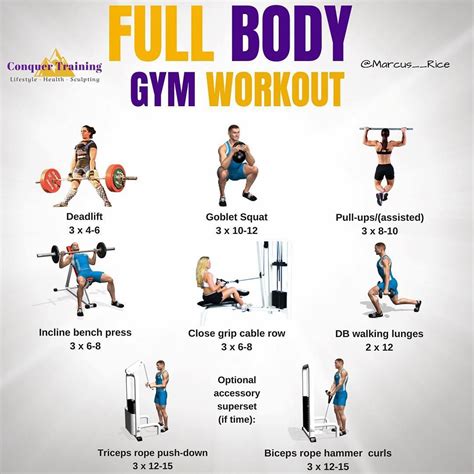
This is arguably the most time-efficient and effective split for busy men, especially those new to serious training or returning after a break. You hit every major muscle group three times a week, allowing for high frequency and excellent recovery.
- Structure: Monday, Wednesday, Friday (or any 3 non-consecutive days).
- Example Workout:
- Squats (3 sets)
- Bench Press or Overhead Press (3 sets)
- Rows (3 sets)
- Deadlifts (1-2 sets, once a week) or Lunges (3 sets)
- Accessory work (e.g., Bicep Curls, Tricep Extensions – 2 sets each)
- Benefits: High frequency, excellent for skill development on main lifts, good recovery time between sessions.

2. Upper/Lower Split (4x/Week)
If you can commit to four days, the Upper/Lower split offers a bit more volume per muscle group while still allowing for good recovery. Each major muscle group is trained twice a week.
- Structure: Monday (Upper), Tuesday (Lower), Thursday (Upper), Friday (Lower).
- Example Upper Workout: Bench Press, Overhead Press, Pull-ups/Lat Pulldowns, Rows, Bicep Curls, Tricep Pushdowns.
- Example Lower Workout: Squats, Romanian Deadlifts, Leg Press, Hamstring Curls, Calf Raises.
- Benefits: Allows for more exercise variety and volume than a full-body split, still good frequency.
3. Push/Pull/Legs (PPL) Split (3x/Week Modified)
While often run 6x/week, a modified 3x/week PPL can also be highly effective for strength gains by cycling through the workouts:
- Structure: Day 1 (Push), Day 2 (Pull), Day 3 (Legs), then repeat the cycle with rest days as needed. For example, Week 1: Push, Pull, Legs. Week 2: Push, Pull, Legs (starting with Push on Monday again).
- Example Push Workout: Bench Press, Overhead Press, Dips, Tricep Extensions.
- Example Pull Workout: Deadlifts, Pull-ups/Lat Pulldowns, Barbell Rows, Bicep Curls.
- Example Legs Workout: Squats, Lunges, Leg Press, Hamstring Curls, Calf Raises.
- Benefits: Allows for dedicated focus on specific movement patterns each session.

Maximizing Every Workout Session
- Warm-up Efficiently: A dynamic warm-up targeting the movements you’re about to perform, followed by a few light sets of your first exercise, is usually sufficient. Skip lengthy cardio or static stretching pre-workout.
- Focus on Form: Quality over quantity. Perfecting your form ensures safety and maximizes muscle activation for strength gains.
- Track Your Progress: Keep a logbook. Knowing what you lifted last time provides a clear target for progressive overload.
- Minimize Distractions: Put your phone away. Focus entirely on your workout.
Beyond the Gym: Nutrition and Recovery
No workout split, however time-efficient, can compensate for poor nutrition and inadequate recovery. For busy men, these elements are even more critical:
- Prioritize Protein: Aim for 1.6-2.2 grams of protein per kilogram of body weight to support muscle repair and growth.
- Adequate Calories: Ensure you’re eating enough to fuel your workouts and support strength adaptations.
- Quality Sleep: This is when your body repairs and rebuilds. Aim for 7-9 hours of quality sleep per night.
- Stress Management: Chronic stress can hinder recovery and strength gains. Incorporate stress-reducing activities into your routine.

Conclusion
Maximizing strength gains as a busy man is entirely achievable with the right approach. By choosing a time-efficient workout split like the Full Body, Upper/Lower, or a modified PPL, prioritizing compound movements, focusing on progressive overload, and paying attention to nutrition and recovery, you can build impressive strength and a resilient physique without letting your busy schedule be an excuse. Consistency, intensity, and smart programming are your most powerful tools.