





Optimal workout frequency for men aiming for rapid muscle growth and peak strength?

Understanding the Balance: Stimulus vs. Recovery
For men chasing rapid muscle growth (hypertrophy) and peak strength, determining the optimal workout frequency is a critical, yet often debated, aspect of training. It’s a delicate balance: you need to provide enough stimulus to trigger adaptation without overtraining, which can hinder progress and increase injury risk. The ‘sweet spot’ lies in maximizing muscle protein synthesis and nervous system adaptation while allowing adequate time for repair and growth.
While there’s no single magic number that applies to everyone, understanding the principles behind effective training frequency can help you tailor a program to your individual needs and goals.

The Science of Training Frequency and Hypertrophy
Muscle growth, or hypertrophy, is primarily driven by progressive overload and the repeated stimulation of muscle protein synthesis (MPS). After a resistance training session, MPS remains elevated for 24-48 hours. Logic dictates that hitting a muscle group more frequently within a week could lead to more cumulative periods of elevated MPS, potentially accelerating growth.
However, this isn’t simply a case of ‘more is better.’ Each training session also induces fatigue and muscle damage, requiring recovery. The art lies in finding a frequency that allows you to provide sufficient stimulus to each muscle group multiple times per week, without compromising recovery for subsequent sessions or the overall training week.
Common Training Splits and Their Frequencies
Full Body Training (2-3x per week)
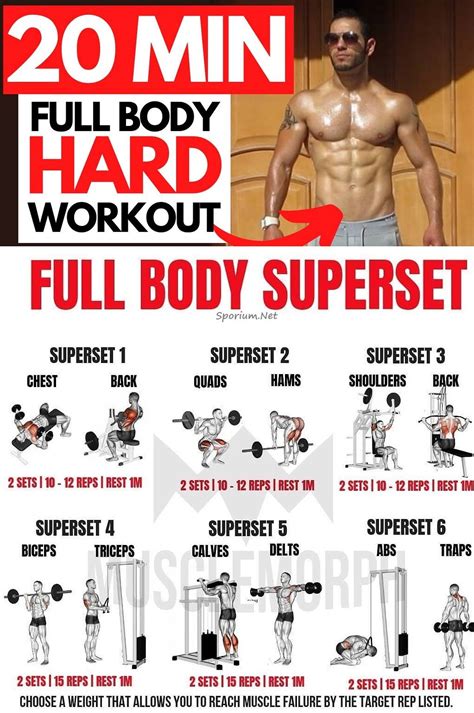
This approach involves working all major muscle groups in each session. For beginners, it’s highly effective as they can make significant gains with less volume per muscle group. It allows muscles to be stimulated 2-3 times weekly, promoting consistent MPS elevation. Advanced lifters can also benefit, especially during strength phases, by focusing on compound lifts and maintaining high recovery.
Upper/Lower Splits (4x per week)
Dividing your training into upper body and lower body days, typically alternating (e.g., Upper, Lower, Rest, Upper, Lower, Rest, Rest), allows for hitting each major muscle group twice per week. This split offers more volume per muscle group per session than full-body training while still providing adequate recovery time between sessions for the same muscle groups. It’s an excellent choice for intermediate lifters aiming for balanced hypertrophy and strength.
Push/Pull/Legs (PPL) (3-6x per week)
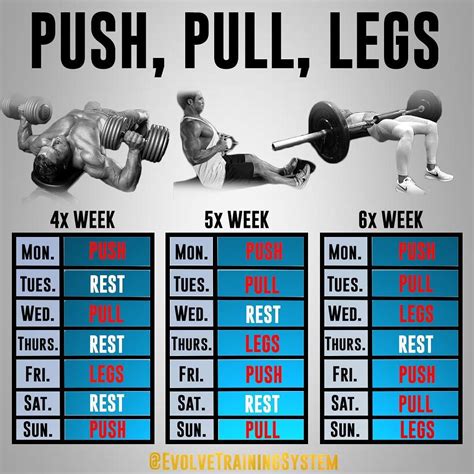
The PPL split organizes exercises by movement patterns: Push (chest, shoulders, triceps), Pull (back, biceps), and Legs (quads, hamstrings, glutes, calves). A typical schedule might be PPL rest PPL rest. This allows you to train each muscle group twice a week when run twice, offering high frequency and volume distribution. It’s highly adaptable; you can run it 3 times a week (once per group) for lower frequency or even 6 times a week (twice per group) for higher frequency, catering to various recovery capacities and goals. PPL is a popular and effective choice for both muscle growth and strength.
Body Part Splits (1x per week per muscle group)
Traditional bodybuilding splits often dedicate one day per week to a single muscle group (e.g., Chest day, Back day, Leg day). While this allows for extremely high volume and intensity for that specific muscle group within a single session, the frequency is low (once per week). For rapid muscle growth, hitting a muscle group only once a week may not be optimal for most individuals, as it leaves significant gaps where MPS is not being actively stimulated.
Key Factors Influencing Your Optimal Frequency
Determining your ideal frequency isn’t just about the split; several personal factors play a crucial role:
- Training Volume and Intensity: If your sessions are very high in volume (many sets and reps) and/or intensity (heavy weights, close to failure), you will naturally need more recovery time, which might necessitate a lower frequency per muscle group. Conversely, if your volume per session is lower, you can often train more frequently.
- Recovery Capacity: This is highly individual and influenced by sleep quality, nutrition, stress levels, age, and genetics. Someone getting 8+ hours of quality sleep, eating a nutrient-dense diet, and managing stress well will likely recover faster than someone neglecting these factors.
- Experience Level: Beginners typically recover faster and make progress with less volume and frequency. Advanced lifters require more stimulus to grow, but also longer recovery periods for maximal efforts.
- Exercise Selection: Compound exercises (squats, deadlifts, bench press) are more systemically taxing than isolation exercises, requiring more recovery.

Finding Your Optimal Path
For most men aiming for rapid muscle growth and peak strength, hitting each major muscle group 2-3 times per week appears to be the most effective frequency. This allows for sufficient stimulus and cumulative volume over the week while providing adequate recovery between sessions. Splits like Upper/Lower or PPL (run twice per week) are excellent starting points.
Practical Steps:
- Start with a moderate frequency: Begin with 2x per week per muscle group.
- Listen to your body: Pay attention to signs of overtraining, such as persistent fatigue, decreased performance, prolonged soreness, or irritability.
- Track your progress: Monitor strength gains, muscle size, and recovery. If you’re consistently making progress, your frequency is likely appropriate. If not, consider adjusting.
- Prioritize recovery: Ensure adequate sleep (7-9 hours), consume enough protein, carbohydrates, and healthy fats, and manage stress.
- Implement progressive overload: Regardless of frequency, consistently aiming to lift more weight, perform more reps, or increase time under tension is paramount for continued growth.

Conclusion
The optimal workout frequency is not a fixed number but rather a dynamic sweet spot determined by your training volume, intensity, recovery capacity, and individual goals. For most men targeting significant muscle growth and strength gains, training each muscle group 2-3 times per week using splits like Upper/Lower or PPL offers the best balance of stimulus and recovery. Experiment, track your results, and always prioritize recovery and progressive overload to unlock your full potential.